
Swain County Probate Office
Probate in Swain County is not handled by a stand-alone probate court. North Carolina uses the Clerk of Superior Court for estate administration, and the clerk serves as judge of probate. That means estate filings, will admissions, letters testamentary, letters of administration, inventories, accountings, and many special proceeding records are court records maintained through the Swain County Clerk of Superior Court.
The local office is at the Swain County Courthouse, 101 Mitchell Street, Bryson City, NC 28713. The courthouse mailing address is PO Box 1397, Bryson City, NC 28713, and the clerk phone is (828) 488-7400. Public hours are Monday through Friday, 8:30 AM to 5:00 PM. The courthouse listing also notes wheelchair access, so visitors who need access help can confirm details before the trip.
Swain County Clerk of Superior Court
Probate, estates, and special proceedings
101 Mitchell Street
Bryson City, NC 28713
(828) 488-7400
Monday-Friday, 8:30 AM-5:00 PM
Swain Probate Terms
Estate files use terms that do not appear in ordinary civil or criminal court records. These definitions help separate a will filing from the later work of collecting assets, paying debts, and closing an estate.
- Testator
- The person who made a will.
- Executor
- The person named in a will to carry out estate duties after appointment.
- Intestate
- Dying without a valid will, which changes how heirs and administration are handled.
- Guardianship
- A court proceeding that appoints someone to act for a minor or an adult who needs legal protection.
- Letters
- Authority papers, such as letters testamentary or letters of administration, that show who may act for the estate.
Search Swain County Probate Records
There are four official ways to look for Swain County probate records: the statewide eCourts Portal, the public self-service terminal in a clerk's office, paper file review in the county where the estate is located, and direct copy requests through clerk staff. The North Carolina eCourts Portal may show civil, special proceeding, and estates case information, but it should not be treated as a full replacement for the paper estate file.
- Search by case number if it is known, or try the decedent, estate representative, petitioner, or attorney name.
- Filter to Swain County when the system offers a county field so similarly named cases in other counties do not crowd the results.
- Use the clerk terminal or paper file at the courthouse when the online result does not show the document, inventory, accounting, or order needed.
- Ask the clerk about copy costs before ordering, since the Swain-specific court document copy amount was not located in the research.
| Field Label | Type | Search Notes |
|---|---|---|
| Case number | Text | Best when known from a notice, prior filing, or clerk reference. |
| Party or decedent name | Text | Use the decedent, estate representative, petitioner, or party name. |
| Attorney | Text | Useful when an estate lawyer filed the proceeding. |
| County | Filter | Set to Swain County for local estate and special proceeding files. |
| Case category | Filter | Estate, special proceeding, or civil categories may vary by system view. |
The court records help topic says civil, special proceeding, and estates records may be accessed through self-service terminals and paper files in the county where the case is located. For Swain County estate files, that county is Swain.
Swain County Estate Files
An estate file may include a will, application or petition, oath, appointment papers, letters, inventory, accounting, creditor notice, orders, and closing documents. The file tracks the legal authority to collect assets, pay valid debts and taxes, and distribute property to heirs or beneficiaries. Some estate records are simple, while others include special proceedings that need more clerk review.
The official estates help topic describes probate as estate administration and also as the process used to decide whether a purported will is legally valid. In Swain County, the clerk's probate role is part of the General Court of Justice, so estate records should be requested from the clerk rather than the Register of Deeds.
The estates help topic is the source for this Swain County probate records image.
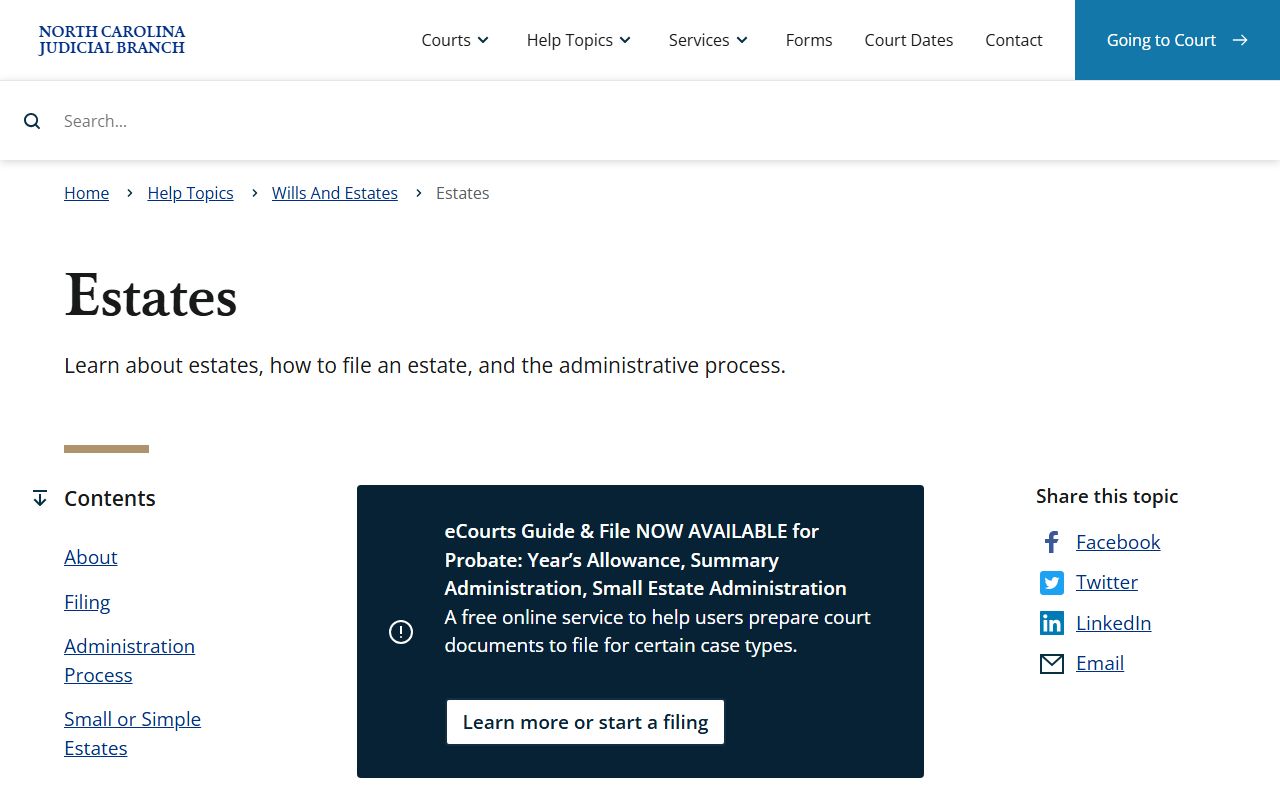
That state help page is useful for understanding the process, but the Swain County file itself remains with the Clerk of Superior Court.
Swain Probate Fees
Exact Swain County estate filing amounts were not located in the official local research. The safe access path is to use the statewide court-costs material or call the clerk before filing, mailing a request, or ordering multiple copies. The research does confirm that clerk staff can provide court file copies for a fee.
| Item | Published Amount |
|---|---|
| Estate filing or application | Not located in Swain official sources |
| Letters testamentary or administration | Confirm with Clerk of Superior Court |
| Court document copies | Fee exists, amount not located locally |
| Certified probate copy | Confirm before ordering |
Do not use Register of Deeds vital record fees as probate fees. The Register of Deeds has separate amounts for birth, death, and marriage certificates, while estate records are clerk-held court records.
Payment planning is still useful even when the exact probate fee is not published in the local research. A visitor may need more than one cost figure: the opening filing, certified copies of letters, plain copies for personal review, and later copy requests after inventory or accounting filings. Calling the clerk before mailing avoids sending the wrong payment form or asking for a copy type the office cannot issue without more case details.
Swain Probate Record Contents
Swain County probate records may show the decedent name, estate case number, filing date, petitioner or representative, attorney, will status, creditor notice, inventory due dates, accountings, clerk orders, and closing status. A record may also show whether the estate is linked to a special proceeding, guardianship, or real-property issue.
An inventory is especially important because it lists estate assets and values as part of the administration process. Accountings show later activity, such as assets collected, valid claims paid, expenses handled, and distributions proposed or made. Letters are also key because banks, agencies, and other institutions often ask for proof that the named representative has authority to act for the estate.
Guardianship records need more care. The North Carolina guardianship help topic explains guardianship as a court process for adults who have been adjudicated incompetent and for other protected situations. Some guardianship material may include medical, financial, minor, or protected personal data and may not be open like an ordinary estate file.
The guardianship help topic is the source for this Swain County probate records image.
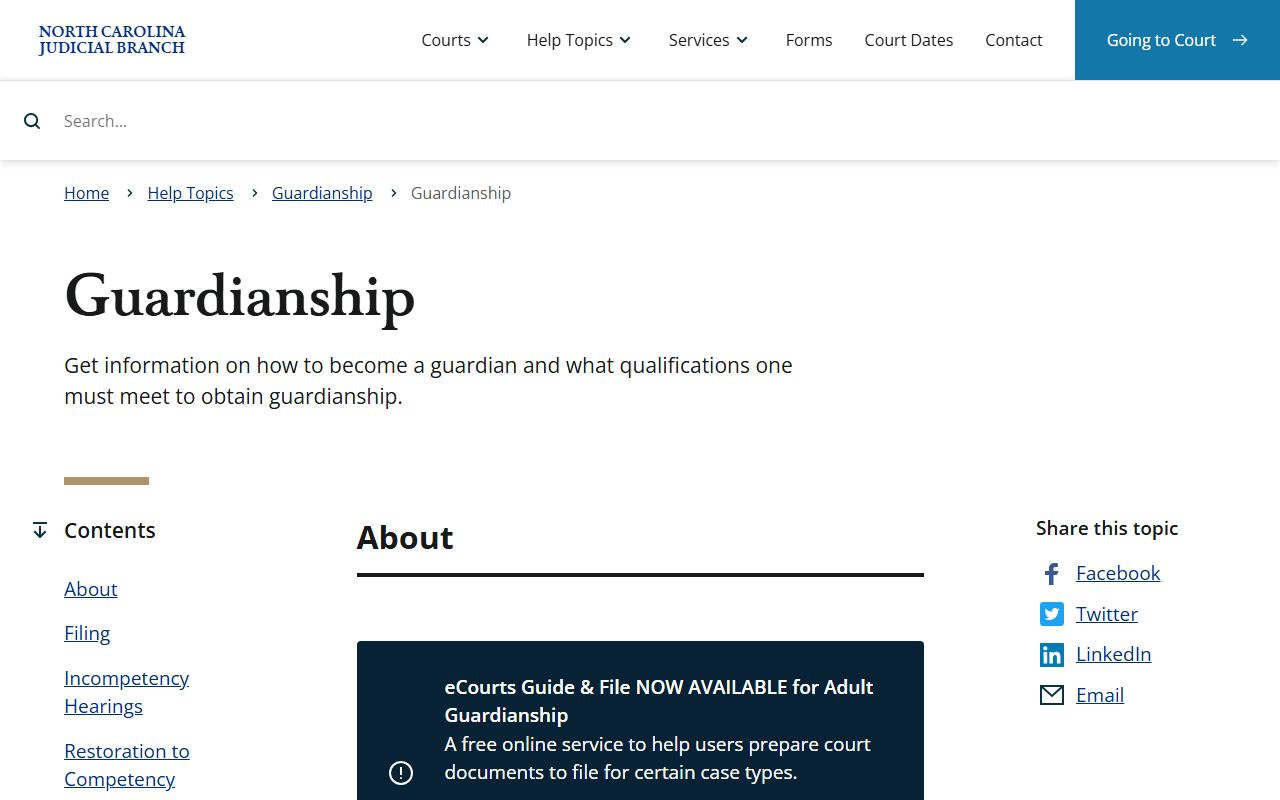
Guardianship can overlap with probate research, but access rules may differ from a routine estate administration file.
Restricted Swain Probate Records
Estate files are generally court records, but access is not unlimited. Minor guardianship material, adult guardianship records, medical information, protected financial account data, Social Security numbers, and sealed filings may be restricted or redacted. Juvenile-related records are also governed by North Carolina juvenile record rules and should not be treated as ordinary public probate records.
When a Swain County probate file seems missing online, the reason may be age, filing type, system limits, redaction, or a legal access restriction. The best next step is the clerk's office, because the clerk can explain whether the file is available for public inspection, whether a copy can be issued, and whether a court order or party status is required.
Historical probate research can require extra patience. Older estate papers may not be fully represented in online systems, and older courthouse records may need a paper-file or archive path. The Swain County Heritage Museum and the historic 1908 courthouse are useful local history landmarks, but current estate filing and records access still use the Mitchell Street courthouse and the Clerk of Superior Court.
Note: Probate records are court files; deeds, marriage certificates, and most vital records belong with the Register of Deeds.